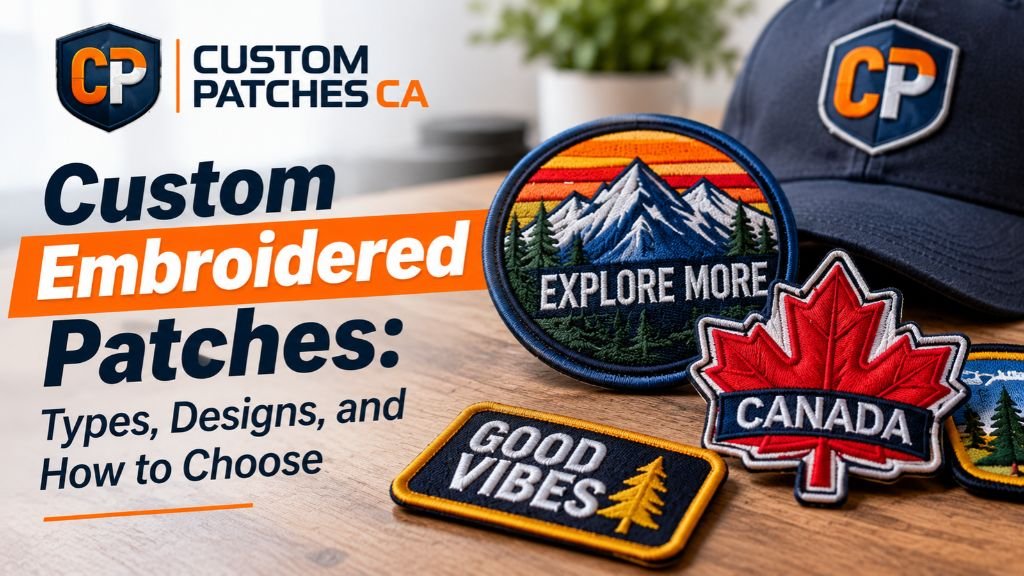
Choosing custom embroidered patches involves more than picking a design and thread colours. The embroidery style, coverage, and border finish can change how your logo looks, how much detail it holds and how well it suits the garment. A style that works for a bold hockey team crest may not be the right choice for a small business logo or detailed clothing design.
For Canadian businesses, sports teams, clothing brands and clubs, understanding these differences helps avoid design changes and unnecessary costs. This guide covers the main types of custom embroidered patches, popular design options, and the factors to consider before placing an order.
What Are Custom Embroidered Patches?
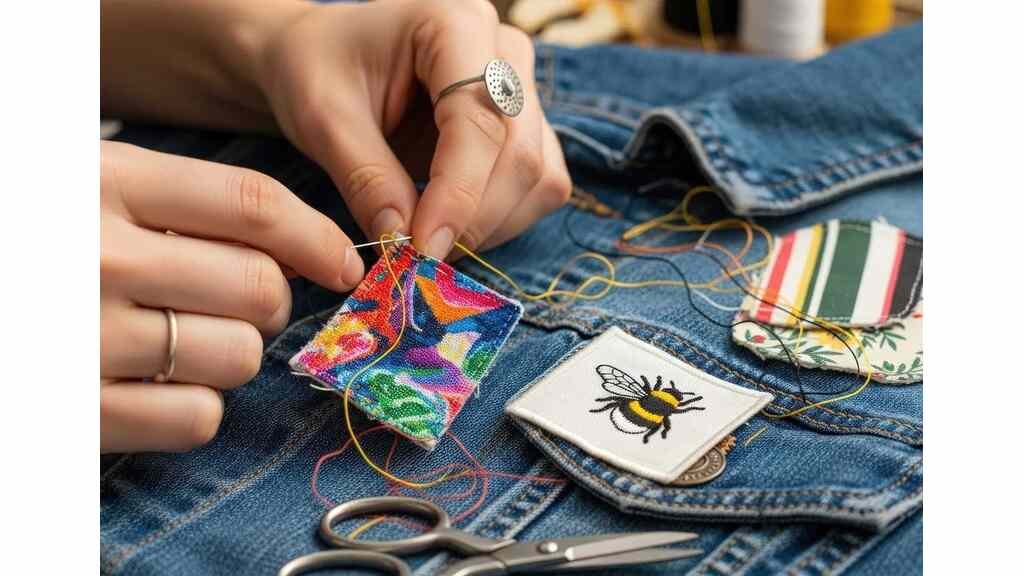
Embroidered patches are small pieces of fabric with a design sewn into them using thread. The base is usually twill or felt, and the edge gets a finish so it won’t unravel. After that, the patch goes onto a jacket, cap, bag, or any other gear you want to mark.
Plenty of people begin by searching for embroidered patches custom-made from their own artwork, and the process is simpler than it sounds. You send a logo or a sketch, the maker turns it into a stitch file, and a machine sews it in the colours you picked. Hockey clubs, school teams, trade crews, restaurants, and event groups across Canada order them all the time. They outlast printed or heat-pressed graphics because the thread sits in the fabric rather than on top of it, so washing and rubbing do much less harm.
Types of Custom Embroidered Patches
[insert a suitable and relevant image showing embroidered patch types]
The types of embroidered patches you can order differ in look, feel, and price, and each one suits a different job. If you want a deeper comparison, read our guide to different custom patch types.
- Merrowed border patches have a thick, rounded thread edge. It is the classic badge look and works for most logos.
- 100% embroidered patches have stitching all the way to the edge, which is a good fit for detailed artwork.
- 3D puff patches have foam under the thread, so bold letters rise off the surface.
- Chenille patches use soft, fuzzy yarn, the same texture you see on varsity jackets.
- Metallic thread patches add gold or silver shine for special editions.
- Laser-cut patches have a clean heat-cut edge, which suits shapes that are hard to border.
| Patch Type | Best Suited For |
| Merrowed border | Uniforms, clubs, classic logo badges |
| 100% embroidered | Detailed logos, full-coverage artwork |
| 3D puff | Caps, bold text, streetwear |
| Chenille | Varsity jackets, school and team letters |
| Metallic thread | Premium branding, special editions |
| Laser-cut edge | Intricate or irregular shapes |
Popular Embroidered Patch Designs and Uses
Business logos are the most common request. Restaurants, landscapers, electricians, and small shops sew them onto aprons, work shirts, and caps so a whole crew looks matched. Team and club crests come second, mostly for hockey, soccer, and curling groups. Event badges mark races, fundraisers, and anniversaries, and name or rank patches remain standard on many uniforms. Illustrated mascots are now popular for merch drops and giveaways too.
Custom embroidered patches for clothes work well on denim, hoodies, work shirts, and toques. They also look good on backpacks and tote bags, which makes them useful as promo items.
Simple artwork with clean lines stitches best, while thin lines and tiny text tend to blur once they become thread. Before you send in your logo, see how to prepare artwork for custom patches.
How to Choose the Right Custom Embroidered Patches
Wondering, “How do I choose custom embroidered patches?” Start with where the patch will be worn, then think about size, detail, colour, and budget. Settling those five early prevents most redesigns. Matching custom embroidered patches to their real use also saves money, because you only pay for what the job needs.
Match the Patch to Its Purpose
A patch on a work jacket gets washed a lot and rubs against tools, so it needs a strong border and a firm backing. A patch on a display jacket or a collector’s set can be more delicate. Try guessing how many washes it will see in a year. That number usually points to the right build.
Pick the Right Size and Level of Detail
Most chest and sleeve patches measure between 2 and 4 inches wide. Small lettering needs a bigger patch to stay readable. If your logo has hair-thin lines or soft gradients, ask the maker to simplify them. Thread can’t copy every detail a printer can, and the cleaner version often looks sharper once it is stitched.
Consider Colours and Thread Choices
Choose colours that stand out from the garment, since a navy patch on a navy jacket will vanish. If you have brand colours, send the exact codes so the thread can be matched as closely as possible. A design with four or five colours is usually easier on the budget than one with twelve.
Budget and Pricing
Need to know how much custom embroidered patches cost? Price depends on size, stitch count, patch type, backing, and quantity. Larger patches with more stitching cost more each, and bigger orders bring the price per patch down. The fastest way to get a real number is to send your design to the maker and ask for a quote.
For a closer look at build quality, read our guide to choosing quality custom patches.
Embroidered Patch Backing Options Compared
The backing decides how the patch attaches and how long it stays on. Here is how the four common options compare.
| Backing | How It Attaches | Best For |
| Iron-on | Heat-activated adhesive | Quick, light-duty application |
| Sew-on | Stitched to fabric | Maximum durability, uniforms |
| Velcro (hook and loop) | Removable attachment | Tactical gear, swappable patches |
| Adhesive (peel and stick) | Pressure-sensitive | Temporary use, non-fabric surfaces |
For anything washed often, sew-on is the safest pick. Iron-on can work if you add a few stitches around the edge, since heat glue alone tends to loosen after repeated washes. Velcro suits uniforms where patches get swapped, such as name tags and rank badges.
What Makes a Custom Embroidered Patch Worth Buying?
You can spot a well-made patch quickly.
- The stitching is dense and even, with no gaps showing the fabric underneath.
- The border is smooth and tight all the way around.
- The colours match your artwork.
- The patch lies flat instead of puckering.
When you buy custom embroidered patches, check stitch density, edge finish, and colour accuracy before approving the order. Ask for a digital proof or a sample before production begins, especially on larger orders, so every patch in the batch matches.
Order Custom Embroidered Patches from CustomPatchesCA
CustomPatchesCA handles the whole process, from cleaning up your artwork to stitching and delivery. We take small runs for local clubs and larger orders for businesses, and we help you choose the type, size, and backing that fit your needs. You can browse our full range under custom patches Canada.
Ready to start? Contact us with your artwork and quantity, and we will send back options and a quote.
End Words
Good patches come from a handful of sensible choices. Pick a type that suits your design, keep the artwork simple, size the patch to fit the text, and choose a backing that matches how often the item gets washed. The right custom embroidered patches balance your design, your budget, and how you’ll use them. Check the proof closely before production, and your patches should last through many Canadian winters.
FAQs
1. What are custom embroidered patches?
They are small fabric badges with a logo or design sewn in thread, made to your artwork and sewn or stuck onto jackets, caps, and bags.
2. How long do embroidered patches last?
With normal care, they last for years, since the thread sits in the fabric and does not crack or fade like a print.
3. What is the best way to attach an embroidered patch to clothes?
Sewing is the strongest option, especially for work jackets and uniforms. Iron-on is quicker, but it holds better with a few stitches around the edge.
4. Can you wash a jacket with an embroidered patch in the washing machine?
Yes. Turn the jacket inside out, use a gentle cycle with cool or warm water, and air dry it, since high dryer heat can loosen the backing.
5. What is the difference between embroidered patches and woven patches?
Embroidered patches have raised, textured stitching, while woven patches are flatter and capture finer detail, so they suit small text and complex logos.
